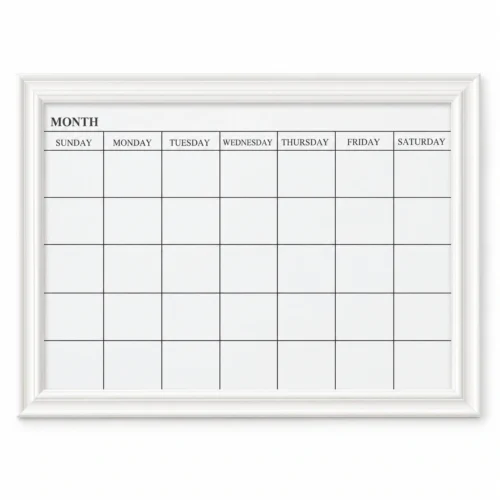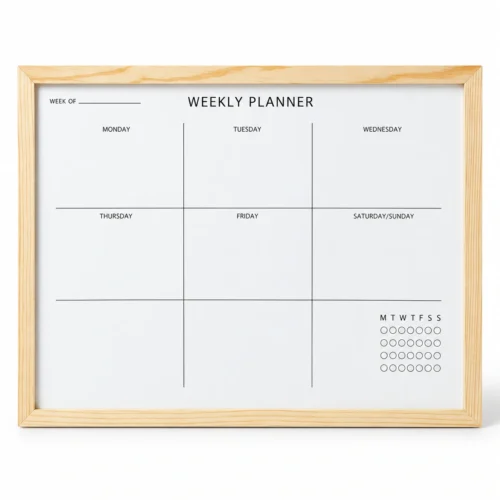
Retail teams change shifts several times a day, promotions rotate weekly and head office sends a steady stream of updates. Getting the right information to the right person at the right moment is a constant challenge. Simple boards, both dry erase and cork, solve a surprising number of these problems because they sit exactly where people work and need no login, no app and no training.
Below are the most useful places to put boards in a store, what each one should show, and how to choose between whiteboards, pin boards and combination boards.
On the Sales Floor: Promotions and Wayfinding
Customer-facing boards should be neat, short and easy to change. A freestanding board near the entrance can announce this week’s offer, a new arrival or an event such as a product demo. Inside the store, smaller boards help customers find their way or explain a product feature that a printed tag cannot.
- Entrance board: one main message, updated at least weekly.
- Department signs: handwritten tips such as “staff picks” or “how to choose the right size.”
- Checkout board: last-minute add-ons, loyalty program reminders or opening hours for holidays.
For freestanding options, see our presentation boards, including double-sided units such as the freestanding double-sided information board, which can carry a different message on each face.
Writing Tips for Customer-Facing Boards
- Write in short phrases that can be read in two or three seconds.
- Use your brand colors for headings and keep body text in one dark color.
- Check spelling and prices against the system before the store opens.
- Assign one person per shift to keep floor boards tidy and up to date.
Staff Huddle Boards
Many stores start each shift with a five-minute huddle. A whiteboard in the back room gives that meeting a structure. A useful layout includes:
- Today’s priorities, such as a delivery to unpack or a display to rebuild.
- Who is covering which zone, register or fitting room.
- Current promotions and the key points staff should mention to customers.
- A space for shout-outs to recognize good work.
Keep the format the same every day so staff know exactly where to look. A magnetic board lets you use name magnets for zone assignments, which is much faster than rewriting names each shift.
Sales Targets and Performance Tracking
A visible target board helps teams understand how the store is doing without waiting for a weekly report. Draw a simple table with daily targets and actual results, or a progress bar toward a monthly goal. Fill it in at shift change. Keep it positive and team-focused rather than ranking individuals in public, which can hurt morale.
Pin Boards in the Back Room
Some information does not change daily but must stay visible: planograms from head office, health and safety notices, holiday request forms, delivery schedules and staff contact lists. A cork board is the natural home for printed documents like these. It keeps the whiteboard free for daily notes and makes it obvious where to find official paperwork.
- Divide the board into zones with ribbon or tape: Company, Safety, Schedules, Team.
- Remove outdated notices every week so new ones get noticed.
- Use colored pins to mark urgent items.
Browse our pin boards for framed cork options, such as the black frame cork notice board. For more on why cork still earns its wall space, read why pin boards still matter in modern workspaces.
Combination Boards for Small Stores
Small shops often have only one free wall in the back. A combination board with a dry erase section and a cork section puts daily notes and printed documents side by side on one panel. It is also a tidy solution for stockrooms, where you might want a delivery checklist next to pinned supplier invoices. See our combination whiteboards for different splits and sizes.
Stockroom and Delivery Planning
In the stockroom, a whiteboard can track incoming deliveries, outstanding returns to suppliers and items waiting to go to the floor. Columns for “Arrived,” “Checked” and “On floor” give a quick picture of what still needs to be done before opening. Hang it near the receiving door so the person signing for a delivery can update it straight away.
Planning for Seasonal Peaks
Back-to-school, holiday shopping and clearance sales put extra pressure on every team. A large planning board in the manager’s office, set up a few weeks before each peak, helps you map out key dates, extra staff, display changes and delivery deadlines in one view. Mark the launch date of each promotion, the day the signage must be ready and the day the floor is reset afterward.
Once the season is over, take a photo of the board before you erase it. That record becomes a ready-made checklist for the same period next year.
Buying for One Store or a Whole Chain
Retail chains benefit from standardizing boards across locations: the same size, frame and pre-printed layout in every store makes training easier and keeps the brand consistent. Resellers and shopfitters can also supply boards as part of a fit-out package; our article on wholesale whiteboards for dealers and distributors explains how larger orders work.
Equip Your Store
Testing a layout in one store? Order single boards through Buy from 1 Piece with flat US$9 shipping in the US. Rolling out to several locations or need your logo printed? Request a quote and we will confirm product and shipping costs before you pay.
Shop the boards in this guide