Lean manufacturing depends on making the state of work visible. When anyone walking past a line can see the target, the actual output, the open problems and who owns them, issues surface faster and meetings get shorter. Digital screens have their place, but a well-designed whiteboard is still the simplest, most flexible visual management tool on the shop floor. This guide covers which boards to use, how to lay them out, and how to keep them working.
Common Lean Boards and What They Do
- Production tracking boards: hour-by-hour or shift targets against actual output, with a column for reasons when the line falls behind.
- Daily huddle or tier meeting boards: the focus of short stand-up meetings, usually covering safety, quality, delivery and people.
- Kanban boards: columns for to do, in progress and done, often with magnetic cards that move across the board.
- 5S audit boards: area maps, audit scores and the actions agreed after each audit.
- Safety boards: days without incident, near-miss reports and current safety focus.
- Skills matrix boards: who is trained on which station, useful for planning shifts and cross-training.
- Problem-solving boards: a structured space for root-cause analysis and action tracking.
Choosing the Right Board for the Shop Floor
Surface
Shop-floor boards are written on and erased many times a day, often by people in a hurry. A hard magnetic surface is the practical choice. Enamel resists scratches and ghosting best under heavy use; painted steel is a solid option for moderate use. Magnetism matters because lean boards rely on magnets, cards and printed sheets. Browse our magnetic whiteboards for steel and enamel options.
Size and readability
Think about the distance from which the board must be read. A huddle board read by a team standing close can be medium-sized. A production board meant to be seen from an aisle needs larger cells and larger writing. It is better to have fewer, larger fields than many tiny ones nobody can read.
Wall, mobile or enclosed
- Wall-mounted boards suit fixed lines and permanent huddle points.
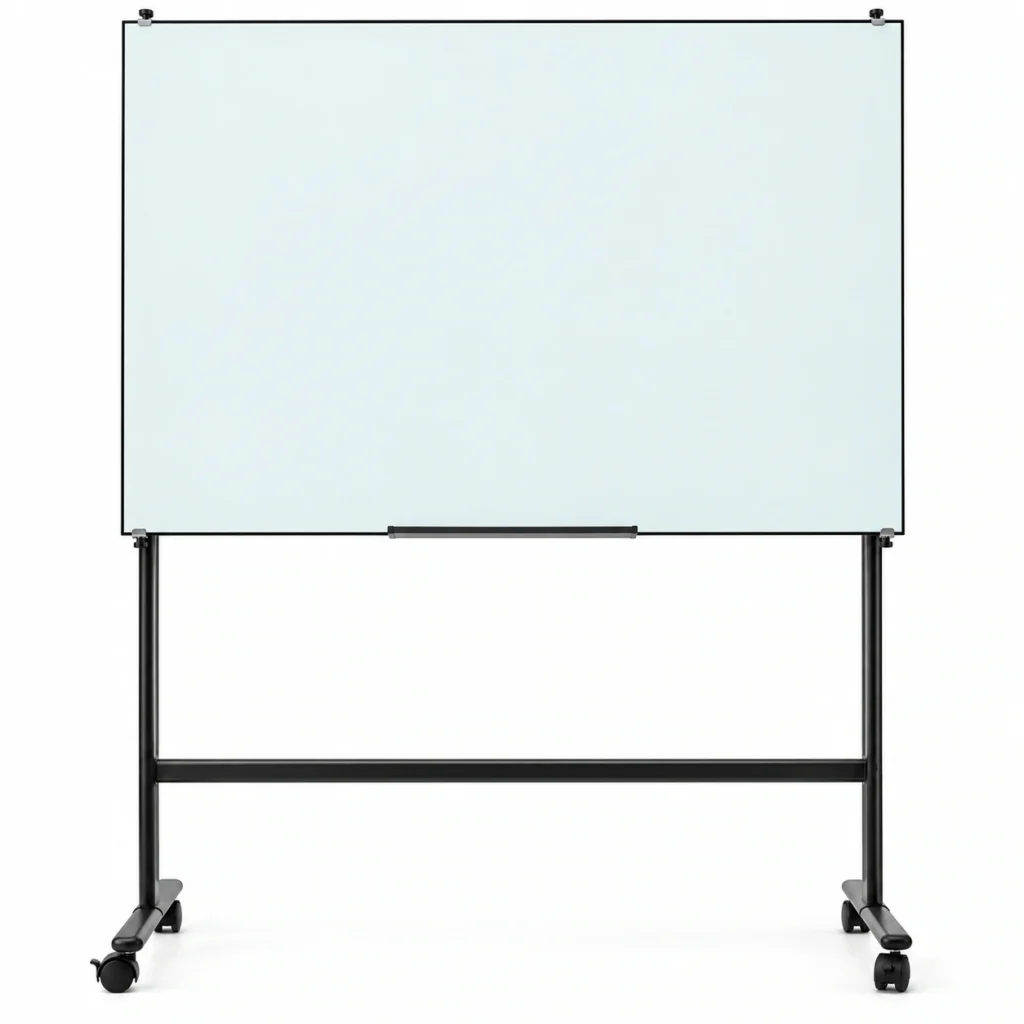
- Mobile and freestanding boards suit areas without usable walls or cells that change layout. A mobile double-sided information board can serve two teams or two shifts.
- Lockable display cabinets protect official documents such as procedures and notices. The top-hinged lockable magnetic whiteboard display cabinet keeps content visible but secure.
Designing the Layout
A good lean board separates what never changes from what changes every shift.
- Fixed elements such as headings, grid lines, KPIs and station names should be permanent: printed on the board or applied with durable tape.
- Variable elements such as numbers, notes and actions go in with dry erase markers.
- Status elements such as green, amber and red indicators work well as magnets, which are faster to move than rewriting.
- Ownership should be visible: every action needs a name and a date.
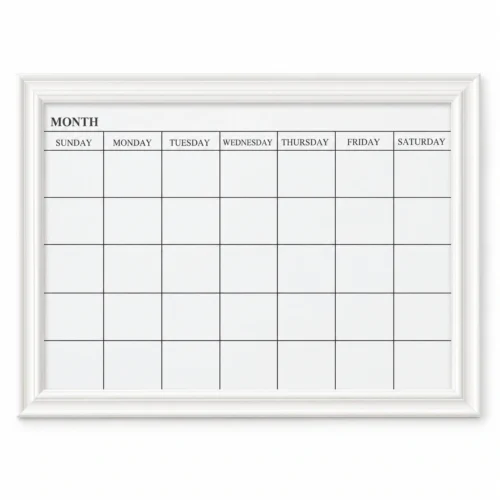
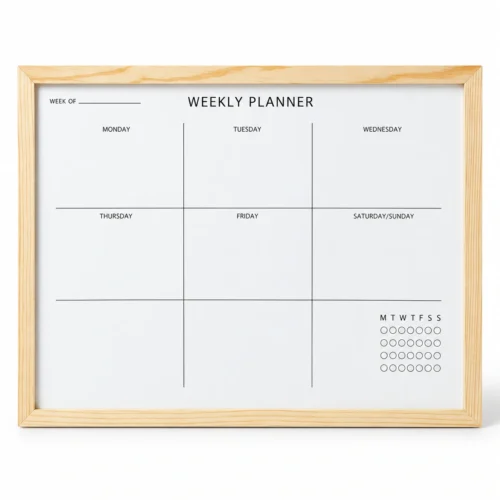
If you are rolling out the same board across many lines or sites, a printed layout keeps everything consistent. Custom printed designs usually start from 100 pieces and are handled through our custom whiteboards service. See custom printed whiteboards for business for ideas on what to print.
Agree on a simple color code and post it on the board itself, for example green for on target, amber for at risk and red for off target. When every board in the plant uses the same colors and the same order of sections, people moving between areas can read any board immediately.
Where to Put Shop-Floor Boards
- At the point of work, close to the line or cell the board describes.
- Where the team naturally gathers at shift start, with enough floor space to stand in a group.
- Out of forklift and cart routes, and away from spray, heat or heavy dust where possible.
- With good lighting, so the board is readable on every shift.
Keeping Boards Alive
A board that is not updated quickly becomes wallpaper. Give each board an owner, agree on when it is updated (for example, every hour for production and every shift for the huddle board), and review it in the daily meeting. Replace markers before they fade, keep an eraser and cleaner nearby, and clean the surface regularly so old data does not ghost through. Every few months, ask the team which fields they never use and remove them.
Start With a Pilot Board
Before ordering boards for every line, build one pilot board with the team that will use it. Draw the layout with tape and markers, run it for a few weeks, and adjust the fields based on what the team actually updates and discusses. Once the layout is stable, it can be standardized, printed and rolled out to other areas with far less rework.
Keep the pilot simple. A board that tracks three or four measures well is more useful than one that tries to show everything. Additional fields can always be added once the habit of updating the board is established.
Accessories That Make Lean Boards Work
- Colored magnets for status indicators and to hold printed sheets.
- Magnetic cards or strips for kanban tasks and team names that move often.
- Fine and bold markers in a few agreed colors, so meaning stays consistent across shifts.
- A dedicated eraser and cleaner kept at each board, not shared across the plant.
- Document holders or pockets for checklists and standard work sheets.
Equip Your Shop Floor
Start with our magnetic whiteboards for wall-mounted production and huddle boards. For printed layouts, multi-site rollouts or large boards delivered to your plant, request a quote; the complete price, product and freight, is confirmed before payment.
Shop the boards in this guide