Buying whiteboards looks simple until the boxes arrive and the board is too small for the meeting room, the wall cannot hold it, or nobody ordered markers. Whether you are equipping one floor or a whole company, a short checklist saves time, budget and awkward re-orders. Work through the twelve questions below with your facilities team before you place the order.
The questions are grouped by topic: users, size, surface, mounting, quantity and timing, and accessories. You do not need perfect answers to every one, but each answer you have narrows the options and makes the conversation with your supplier faster and more precise.
Questions 1–3: Who Uses the Board and How?
Start with the people, not the product. The way a board is used decides almost every other choice on this list.
- How many people will gather around it? A board for two people at a desk and a board for a twelve-person planning session are different products.
- How often will it be written on and erased? Daily heavy use calls for a harder surface than a board that holds a monthly notice.
- Do you need magnets? If teams pin up printouts, schedules or cards with magnets, you need a steel-backed board, not melamine.
Questions 4–5: What Size and Orientation?
Measure the actual wall space, including light switches, door swings and furniture. Then decide on the board itself.
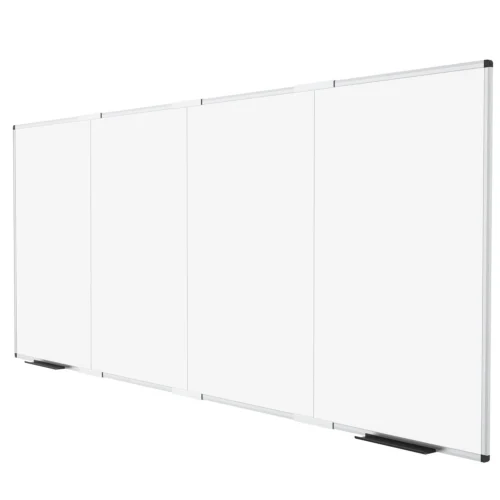
- What is the largest size the wall and the doorway allow? Large boards must also fit through doors, elevators and stairwells on the way in. Our whiteboard size guide walks through common room sizes.
- Landscape or portrait? Landscape suits meeting rooms and timelines. Portrait works in corridors, beside desks and in narrow spaces.
Questions 6–7: Which Surface and Frame?
Surface choice affects how clean the board erases after months of use. For a detailed comparison, read our guide to whiteboard surface types.
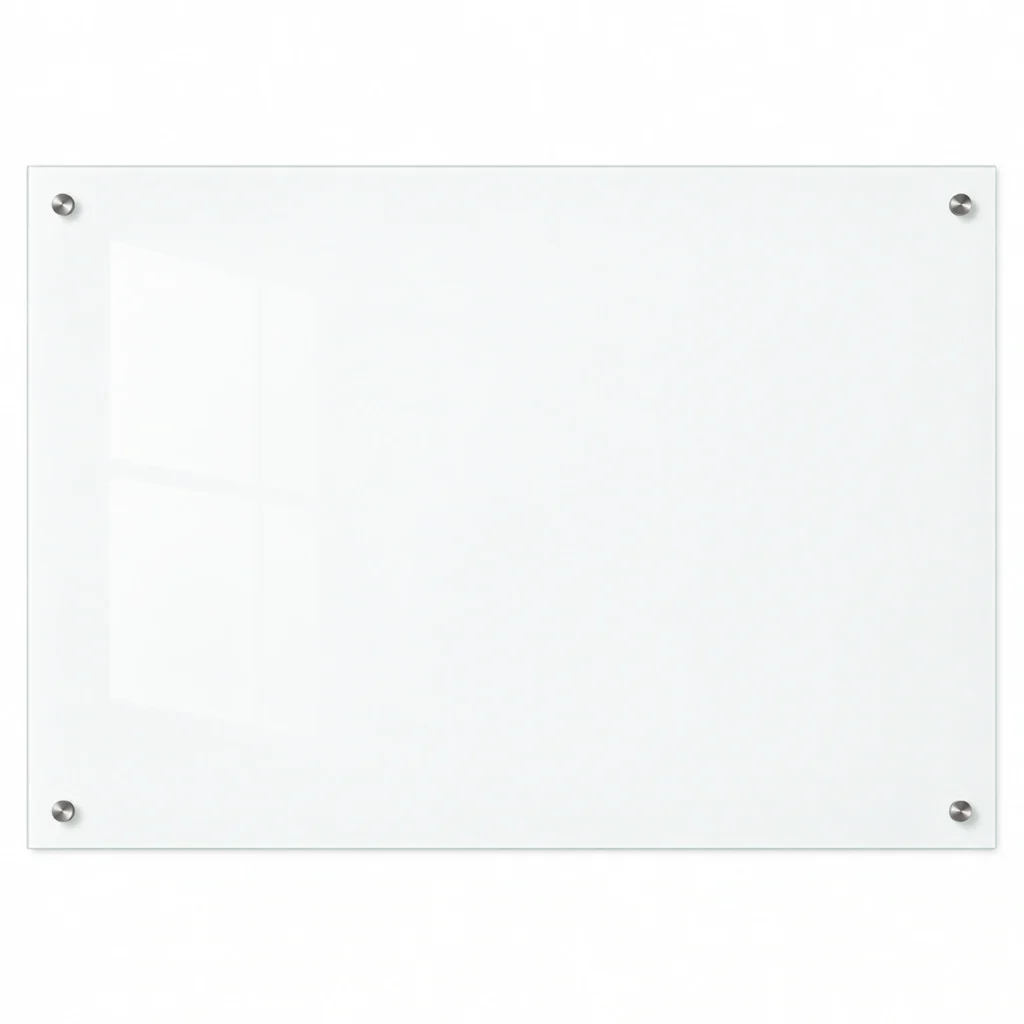
- Painted steel, enamel, melamine or glass? Painted or coated steel is a practical magnetic all-rounder, enamel suits the heaviest daily use, melamine is a non-magnetic option for light use, and tempered glass gives a modern look and is available in magnetic and non-magnetic versions.
- What frame finish matches the space? Aluminum frames fit most offices; wood or colored frames suit reception areas, creative studios and home offices.
Questions 8–9: How Will It Be Mounted or Moved?
- Wall-mounted or mobile? Wall boards are fixed and space-efficient. A mobile board on casters can move between rooms and is often double-sided. Browse mobile whiteboards if rooms are shared or reconfigured often.
- What is the wall made of? Drywall, brick, concrete and glass partitions each need different fixings. Confirm this before the installer arrives.
Questions 10–11: How Many, and How Fast?
- Is this a single replacement or a rollout? For one or two boards, the Buy from 1 Piece page lets you order selected boards and markers with flat US$9 shipping in the US. For larger quantities, standard products are ordered at the per-piece prices shown, and the minimum order depends on the product and size.
- When do you need them? Custom and quoted orders usually take about 10 days to produce, then sea freight takes roughly 30–40 days economy or 20–25 days fast. Plan office moves and new openings with that window in mind.
Question 12: What Else Goes in the Order?
The board is only half of a working setup. Before you check out, confirm the extras:
- Markers and erasers: order a starter stock from the whiteboard markers range so the board is usable on day one.
- Pen tray: most framed boards include one; check the product page if your team relies on it.
- Magnets and accessories: useful for steel and magnetic glass boards.
- Branding: if you want your logo or a printed layout, custom printed designs usually start from 100 pieces and are quoted separately.
Common Mistakes the Checklist Prevents
Most whiteboard problems in offices trace back to a handful of avoidable decisions. Keep these in mind while you fill in your answers:
- Buying for the room, not the use: a large meeting room used mostly for video calls may need a smaller board, while a small project room used for daily stand-ups may need a bigger one.
- Mounting too high or too low: set the writing area so most users can reach the top third comfortably, and keep the bottom edge above desk or chair height.
- Ignoring glare: a glossy board facing a window can be hard to read at certain times of day. Check the light before you choose the wall.
- Mixing too many models: standardizing on two or three sizes and one frame style makes future replacements and spare parts much easier.
Putting the Checklist to Work
Turn the answers into a simple spreadsheet with one row per room: size, orientation, surface, frame, mounting, quantity and accessories. This makes approvals faster and gives your supplier everything needed for an accurate quote. A popular starting point for meeting rooms is a framed magnetic wall board such as the premium magnetic wall whiteboard with C frame, which you can compare against other options in the same category.
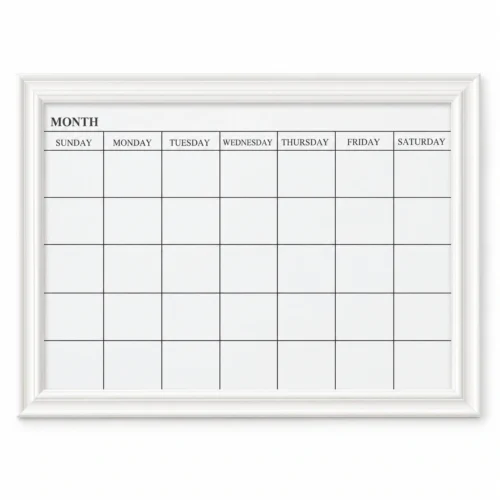
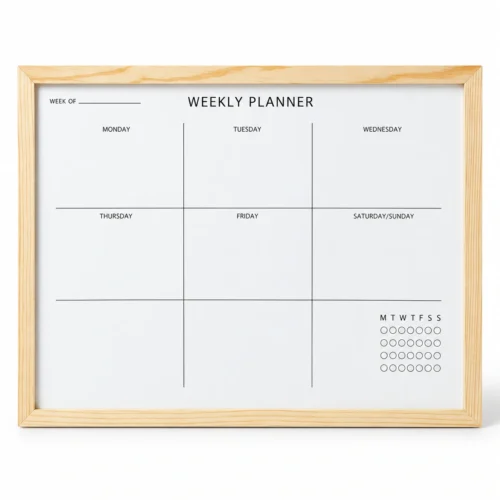
Also note any room that needs something unusual, such as an extra-large wall, a curved space or a board with a printed grid. Those items are best handled as a custom quote so the full price, including shipping, is confirmed before payment.
Ready to Order?
Browse our magnetic whiteboards to match your checklist to real sizes and frames. For a single board, go to Buy from 1 Piece; for a rollout, custom size or printed design, request a quote and we will confirm product and shipping before you pay.
Shop the boards in this guide